03 · UI / UX Design AccuWeather · 2014 · 2016

Accu
Weather.

AccuWeather had 120 million users and best-in-class forecast accuracy. People were still opening a competitor's app to check the weather. Accuracy wasn't the problem. Usefulness was.

UI Design UX Design Illustration Motion Design iOS · Android Accessibility
120M+
Monthly active users
4.6
App Store · 1.5M ratings
5
Platforms my features reached
01 · The Contradiction

Best-in-class accuracy.
People still left for a competitor.

AccuWeather had the most accurate forecast data on the market. The problem wasn't accuracy. The problem was that accuracy buried in a noisy, dense interface isn't useful. My job was to close that gap: make the data feel immediate, personal, and worth coming back for.

"Weather is only useful when it's immediately readable. Every feature had to answer the user's actual question before they had to look for it."

Design principle · AccuWeather feature work
Before
AccuWeather before redesign
After · My Work
AccuWeather after redesign
02 · The Playground

Before I zoom in,
I zoom out.

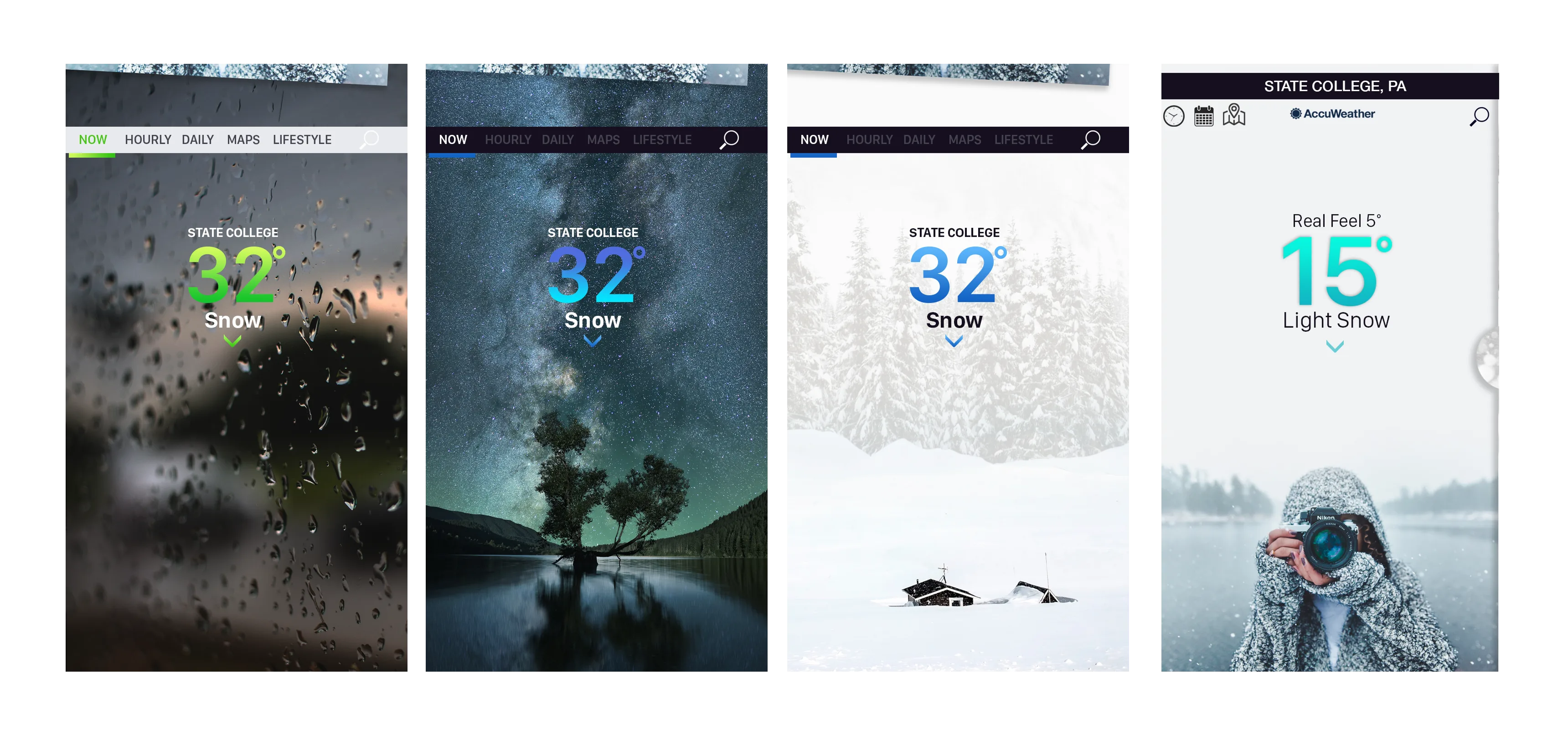
The original concept started with a question: what if the app felt like looking out your own window? Not just data on a screen, but a window into the future of your specific place. To create that connection, I explored using real photography of the locations the weather was showing. The idea was simple: if you see your city, your neighborhood, your sky, the app starts to feel like it was made for you.

My first direction used cards instead of scrolling. Each card held a forecast moment, the weather as a contained experience you moved through rather than scrolled past. It felt fresh. Then we talked to users. Scrolling was deeply familiar. Changing that pattern created friction where none needed to exist. So we kept the scroll and found another way to bring the vision to life: moving the location photography into the background, making it atmospheric rather than structural. The window into your world was still there, just behind the data instead of competing with it.

This was a true team effort and honestly one of the most fun parts of the project. Everyone got to present directions, push ideas, and contribute to the final solution. My focus went into building the weather animations using a custom script, and into the MinuteCast redesign. But the energy in that process was something I still think about.

AccuWeather design explorations

Early explorations · AccuWeather redesign · Direction testing before final design

AccuWeather concept
03 · The Signal

Users told us what they wanted.
Then they didn't do it.

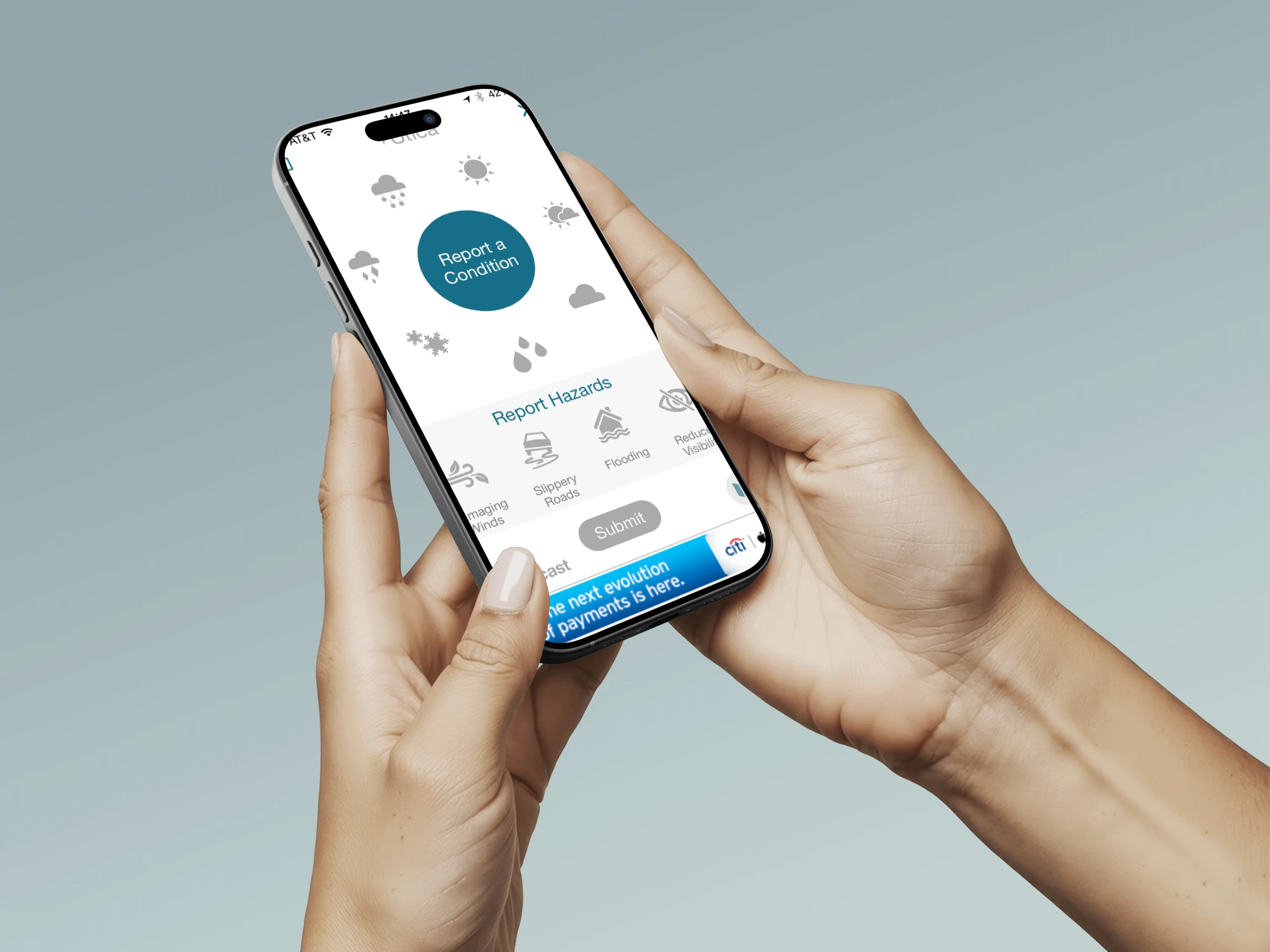
Before we designed solutions, we listened. User interviews pointed clearly in one direction: people wanted to contribute local conditions, see what their neighbors were reporting, and trust the data more because real people confirmed it. The demand felt real. So we built AccuCast, a crowdsourced layer letting users report local weather in real time.

Crowdsourcing was having a moment. Everyone believed in it, and honestly, so did we. The only pushback internally was to keep it small. Ship an MVP, test the hypothesis, don't over-invest. That instinct was right. Almost no one submitted anything. Weather apps are utilitarian. Users open the app, check the forecast, and leave. The intention was genuine. The behavior never followed.

That failure shaped every decision after it: design for what people actually do, not what they say they'll do.

What didn't work

AccuCast relied on users voluntarily reporting local weather conditions. Survey research pointed clearly toward demand — people said they wanted to contribute. So we shipped a lean MVP to test the real hypothesis rather than over-invest on a signal that hadn't been proven in behavior.

Overall engagement was low. The users who did engage came back daily — a genuine habit signal — but total adoption never reached a threshold that justified continued investment. We made the call to sunset the feature.

The takeaway: surveys tell you what people wish they'd do. Shipping tells you what they actually do. I'd rather learn that early with a small MVP than late with a full build.

04 · The Constraint

Weather is a split-second decision.
Every feature had to match that speed.

People don't open a weather app to read. They open it to decide. Should I grab a jacket? Will the rain stop before I leave? Each feature had to deliver its answer before the user had to look for it.

Precision is the value prop

MinuteCast® isn't just a feature, it's the reason a user keeps AccuWeather over a default app. The design had to make that precision feel immediate, not buried.

Animation as information

Live weather animations weren't decoration. A rain animation tells you the weather before you read a number: faster, more intuitive, more human.

Illustration as accessibility

Allergy data is clinical by nature. The illustration system made it approachable, giving seasonal conditions a visual identity readable at a glance.

Platform as opportunity

The Windows 10 launch meant reaching 100M+ users on day one. A single adaptive design had to hold up across PC and mobile with no room to iterate in public.

04 · MinuteCast®

Minute by minute.
Pinpointed to your door.

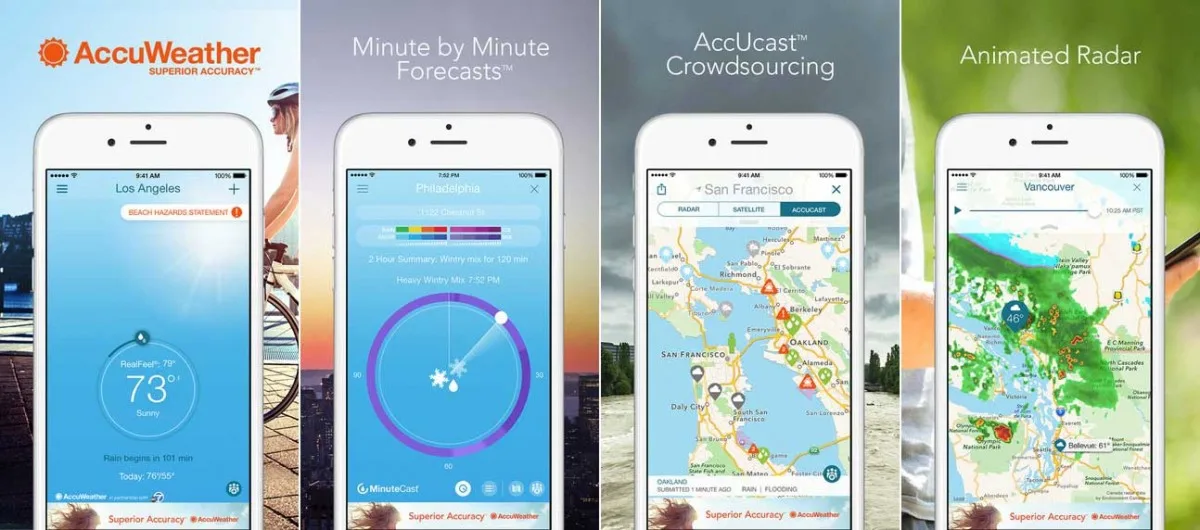
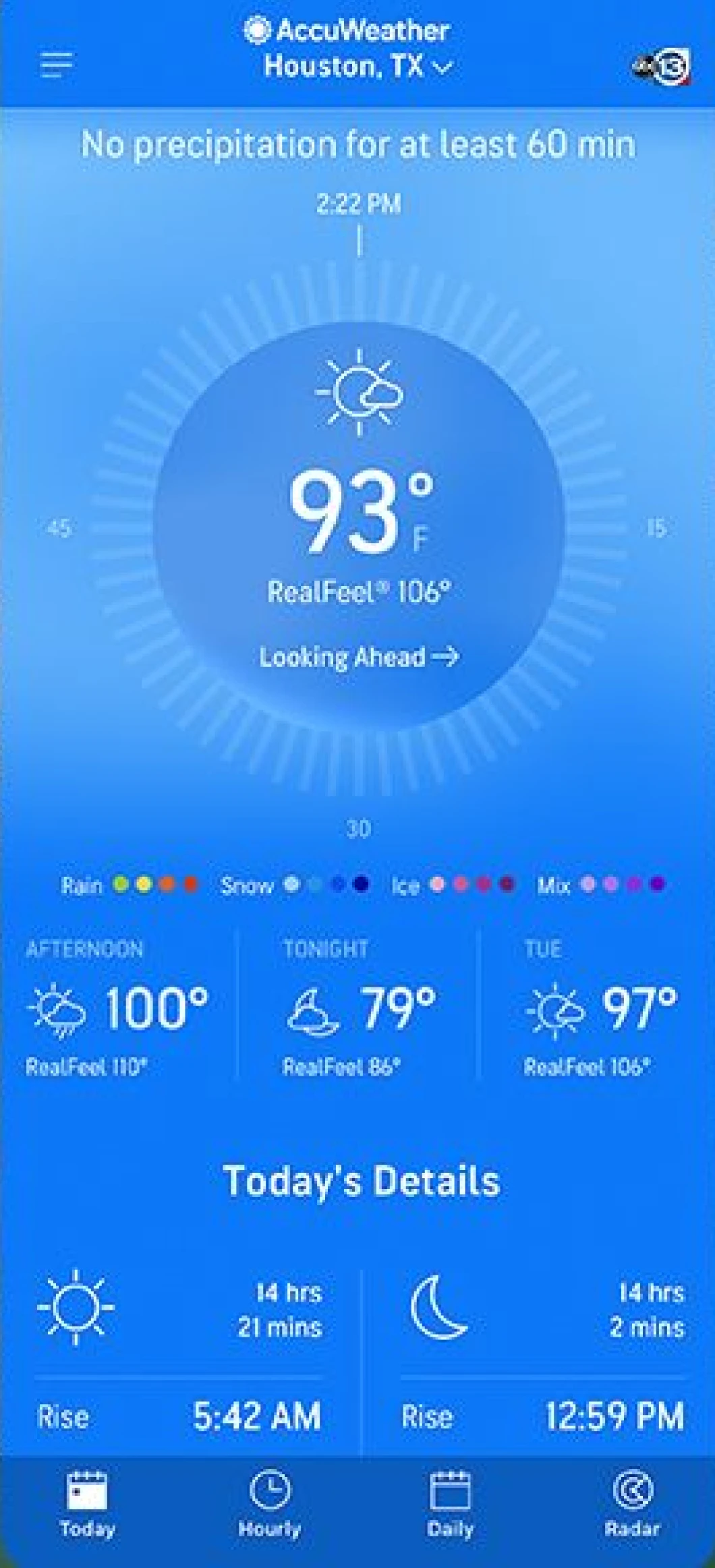
MinuteCast® is AccuWeather's patented minute-by-minute precipitation forecast, hyperlocal, address-specific, accurate to within 120 seconds. The first stakeholder reaction was that 120-second intervals was too much precision for users to understand. We disagreed. Users don't want approximations when they're deciding whether to step outside.

The redesign made that precision legible and immediate. It's now available globally across iOS, Android, web, and automotive platforms.

120s
Forecast precision
4
Platforms: iOS, Android, Web, Automotive
Global
Availability after redesign
MinuteCast redesign

MinuteCast® · Patented minute-by-minute precipitation forecast · Available globally

05 · Design Decisions

Four features.
Each one earned its place.

01 Live weather animations.

Early prototypes made the app feel like a screensaver. The animation had to communicate conditions, not decorate them. Rain, snow, storms, and clear skies, each tied to real-time data, each telling you the weather before you read a word.

02 AccuCast — crowdsourced conditions.

The risk: user-submitted data could be wrong. We had to design for trust without hiding the uncertainty. Color-coded pins on a live map, real-time conditions from people nearby, a layer no algorithm can replicate. Launched July 2015.

03 MinuteCast® redesign.

When we launched, the precision wasn't fully there yet. We knew it. But we shipped anyway, because user response showed us that people genuinely wanted minute-level granularity. That signal justified years of continued investment. MinuteCast is now one of AccuWeather's most accurate and most-used features. Shipping early, before it was perfect, is what made it great.

04 Windows 10 universal app.

Launching on a platform with 100M+ users on day one meant no room to iterate in public. A single adaptive experience for PC and mobile — shipped December 2015.

AccuCast — crowdsourced weather conditions

AccuCast · Crowdsourced local conditions · Launched July 2015

07 · Outcome

What shipped

More than features, something people relied on.

I think about what we shipped less as a list of features and more as moments that actually reached people. After the redesign, MinuteCast® expanded globally, showing up across iOS, Android, web, and even in cars. It went from being a feature to something people relied on in everyday decisions.

AccuCast started as a simple MVP. We had a hypothesis, built just enough to test it, learned what we needed, and let it go. It was a reminder that not everything has to last forever to be valuable.

One milestone I still remember clearly is the Windows 10 app launch in December 2015. It felt like a marker of how far things had come.

Altogether, the work reached over 120 million users and held a 4.6 rating. But what stayed with me most is why it mattered. It was about building something that genuinely helped people. That's always been my motivation, because an application has no real value if it isn't making someone's life a little better.

Working on AccuWeather really changed how I see the impact of what I build. It showed me that even something as simple as an app can genuinely save lives. We'd hear stories about people getting to safety before a tornado because of a notification, and that stuck with me. It's something I carry into every project. Not as pressure, but as a quiet reminder that the small details matter more than they seem.