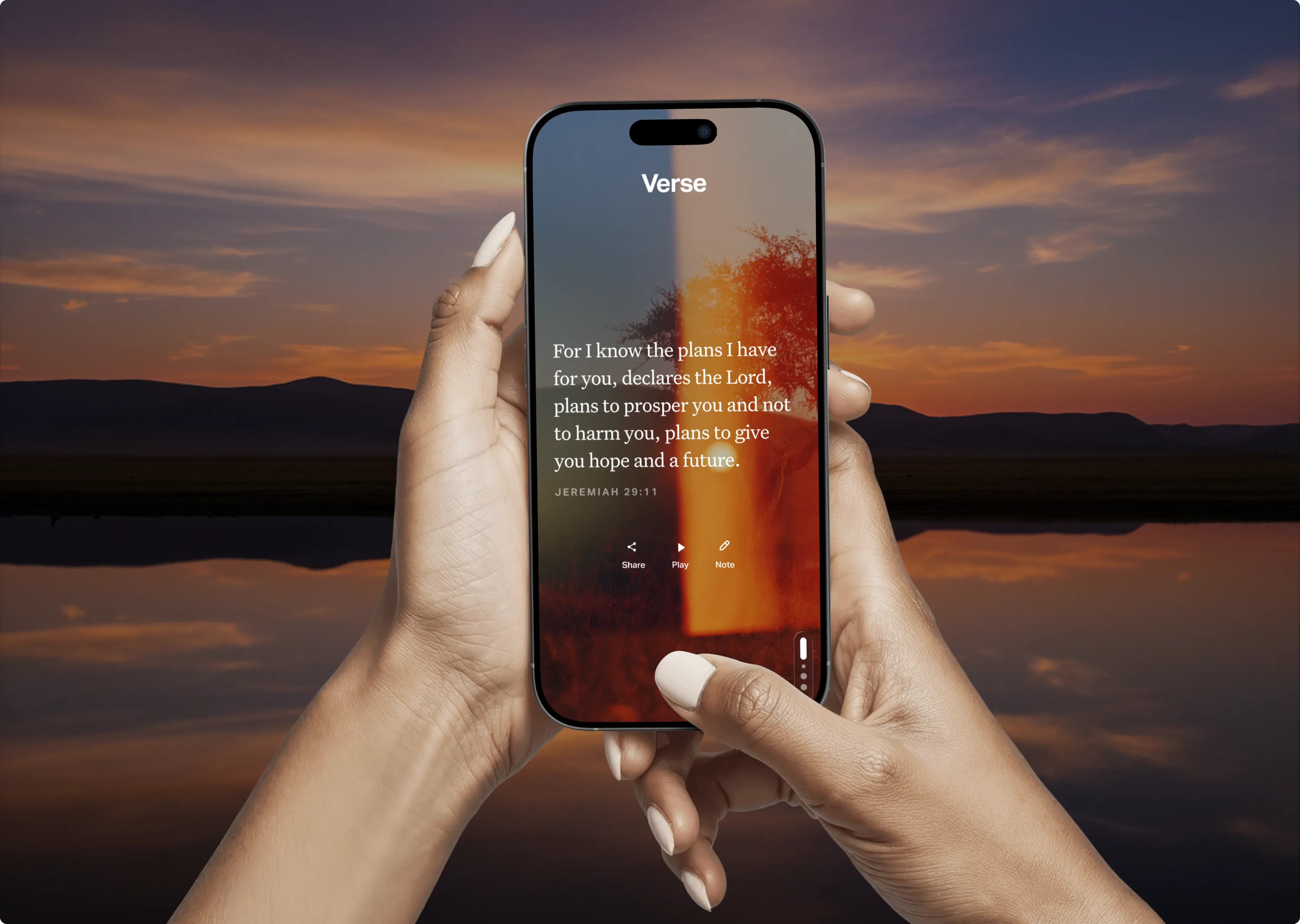
Designing a Bible app for people where connectivity is a luxury, not a given. Where the Bible itself can feel intimidating. Every tap, every kilobyte, and every illustration had to say: you are welcome here.
I am the sole designer on this product. I own the full design process end to end: user research, wireframes, UI, illustration, and collaboration on product strategy. One designer. One PM. A small engineering team.
I grew up in the Dominican Republic. I know what it feels like to share a slow connection, to use a phone that wasn't the newest model. When this project landed on my desk, it wasn't abstract to me. I knew exactly who we were designing for.
The Bible App had already reached hundreds of millions of people. But there was a different audience we weren't reaching. One with older devices, limited storage, and no guarantee of a data connection. Not an edge case. Roughly 37% of the global population. People like my family.
"We didn't just need a lighter app. We needed an invitation. Every design decision had to say: you are welcome here."
Design principle, Bible App LiteI interviewed 20+ users across Africa, South America, and Latin America. What they described felt familiar: spotty connections, shared devices, apps that worked great until they didn't.
Device reality
Older Android devices with limited RAM and CPU. Rendering must be simple, predictable, and fast to initialize.
Storage pressure
Users managing tight storage budgets. Every asset, every Bible version, every illustration had to justify its size.
Offline-first
Internet access is irregular and often tethered to specific locations. The core experience must function with zero connectivity.
Language diversity
300+ languages. Typography, layout, and text-scaling had to hold up across scripts with vastly different character sets and reading directions.
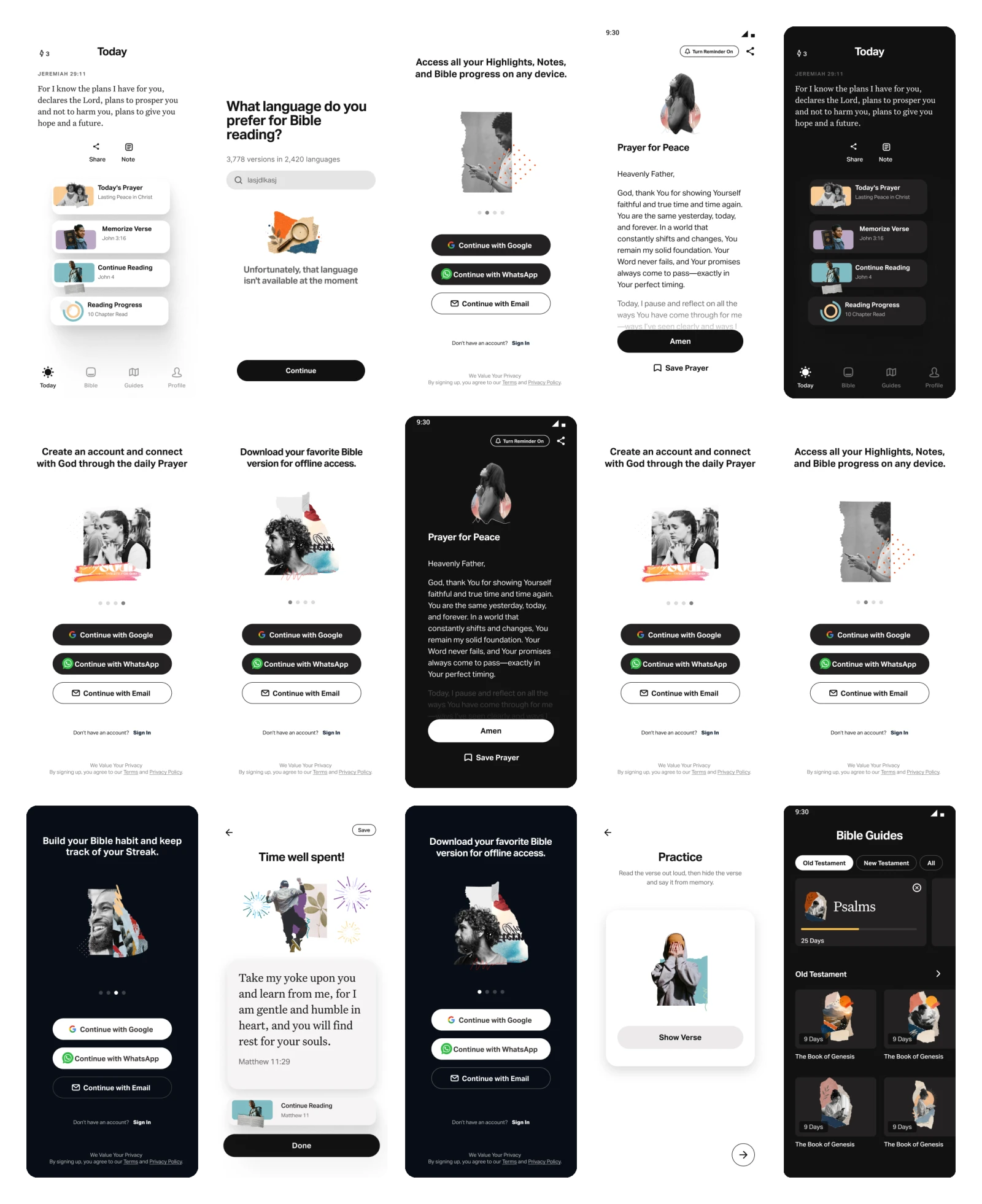
Onboarding designed for offline-first. Users download a Bible version before leaving Wi-Fi.
Users prompted to download a Bible version and audio on first launch, while connectivity exists. The app then never requires a connection to function.
Skeleton screens and lazy loading assume network availability. We replaced these with instant local reads. If content isn't local, it doesn't appear.
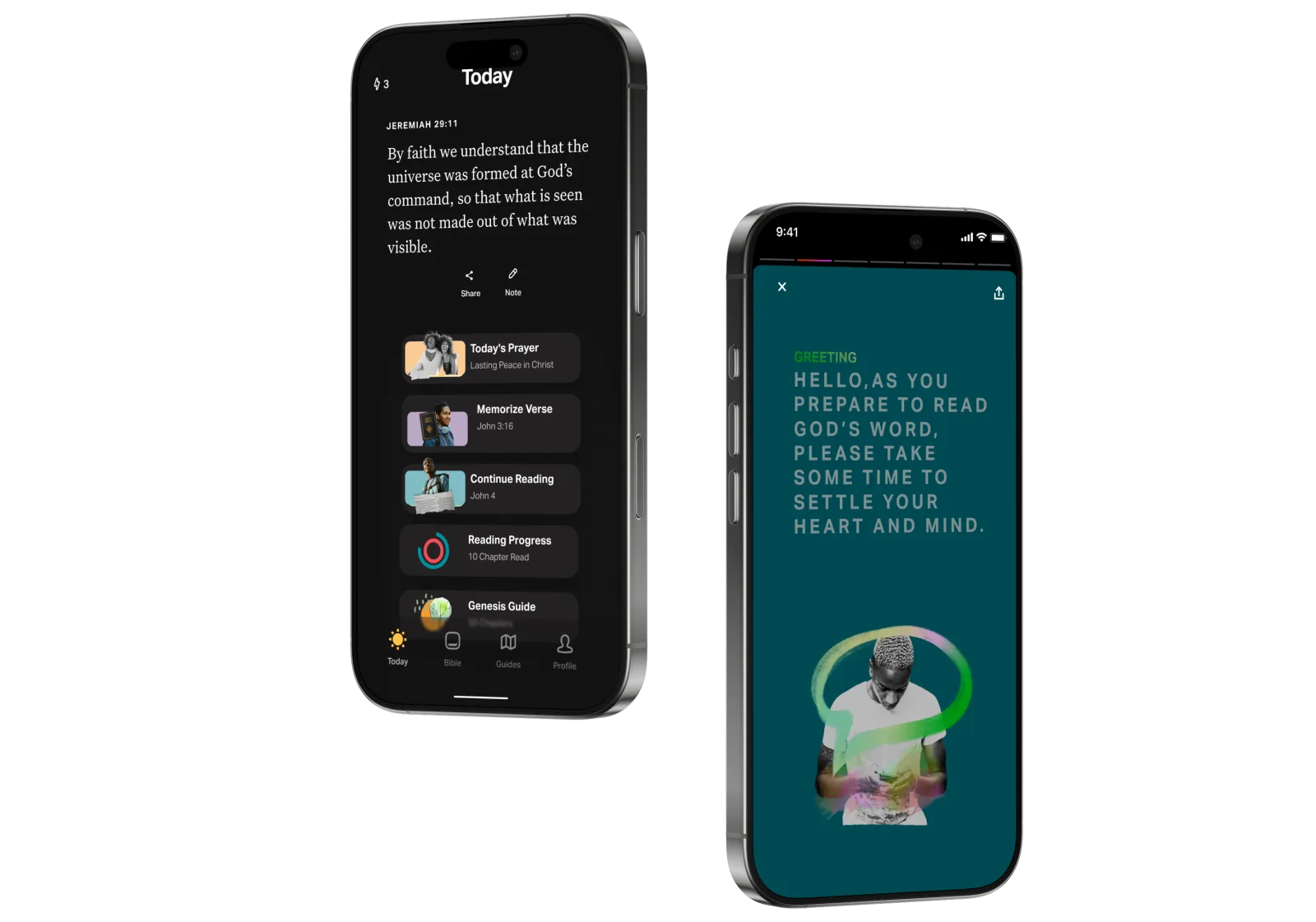
Reduced to three core surfaces: Read, Listen, Pray. No social features, no discovery feeds, no algorithmic content. Intentional friction reduction for users who may be less digitally fluent.
A single daily entry point that requires no decision-making. Lowering the cost of showing up every day was more valuable than maximizing session depth.
Accessibility isn't an afterthought when your users include older adults reading on small screens in poor lighting. Text scaling was built into the foundational layout system, not retrofitted.
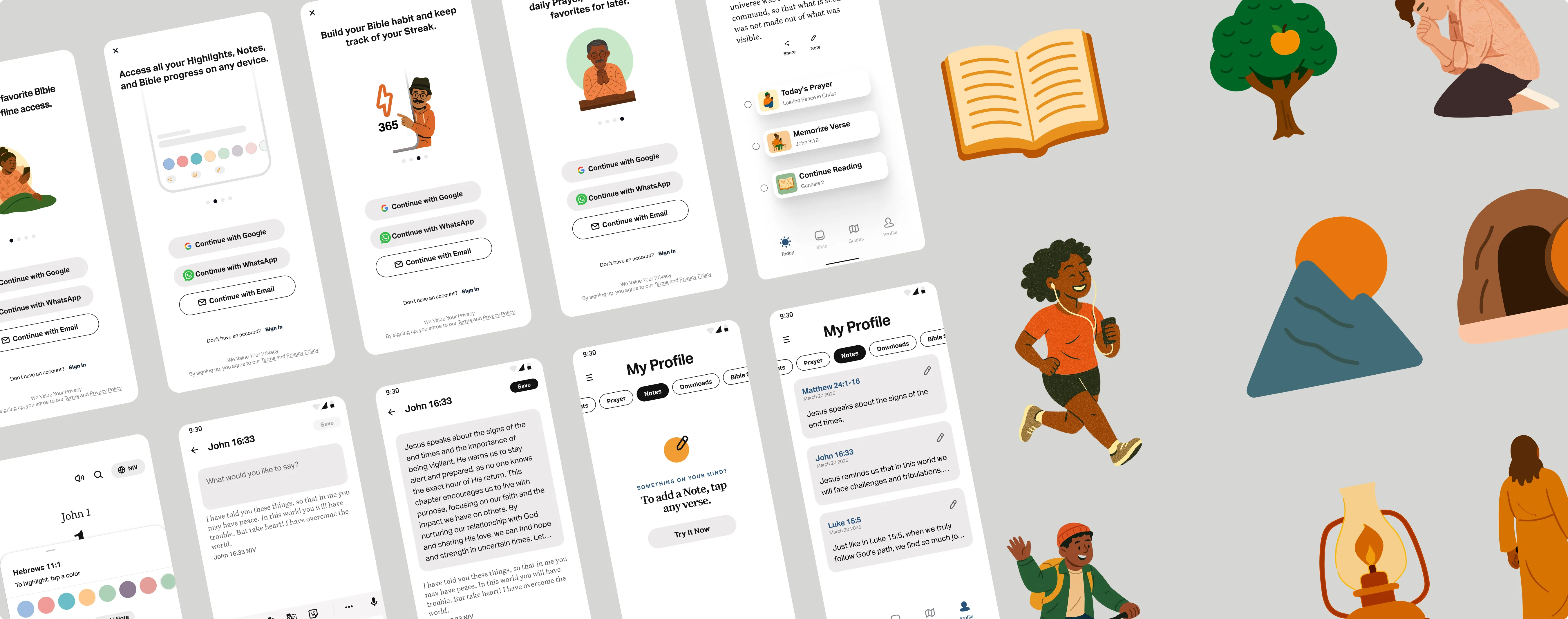
Started with AI generation as a base, then refined every illustration in Illustrator — adjusting faces, details, and cultural markers to feel specific, not generic.
Tested three distinct directions with real users in Africa, South America, and Latin America. Users chose the most human and inviting direction, not the most polished.
Characters, settings, and details reflect the regions we serve. Users should see themselves, not a generic global illustration style.
UI system and illustration library. Built light, built to last.
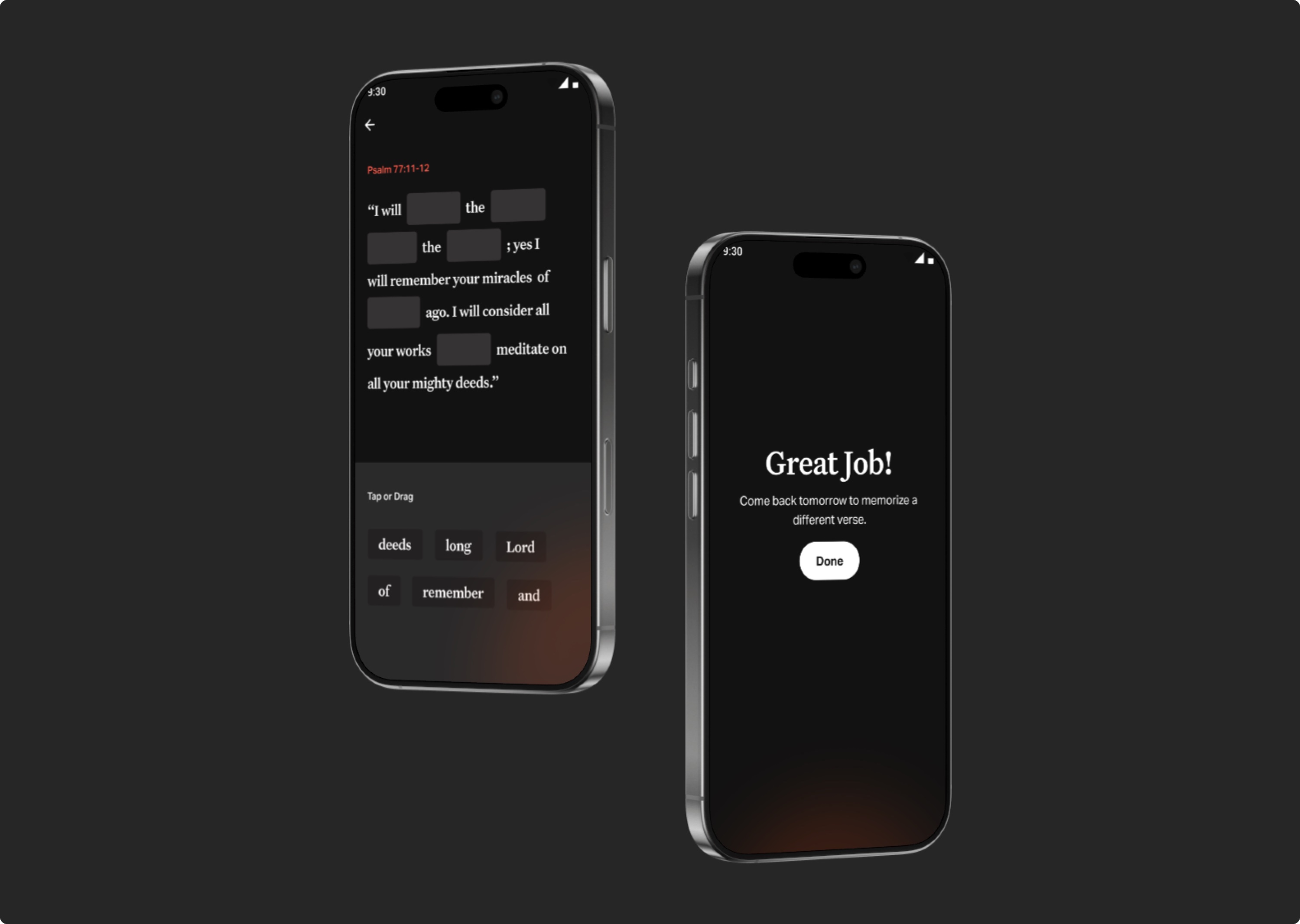
Memorization game: easy, fast, fun. Users who play show 83% higher Day-1 retention.
One tap. Tied directly to the verse. Completely frictionless. Users describe it as a door to start a conversation with God.
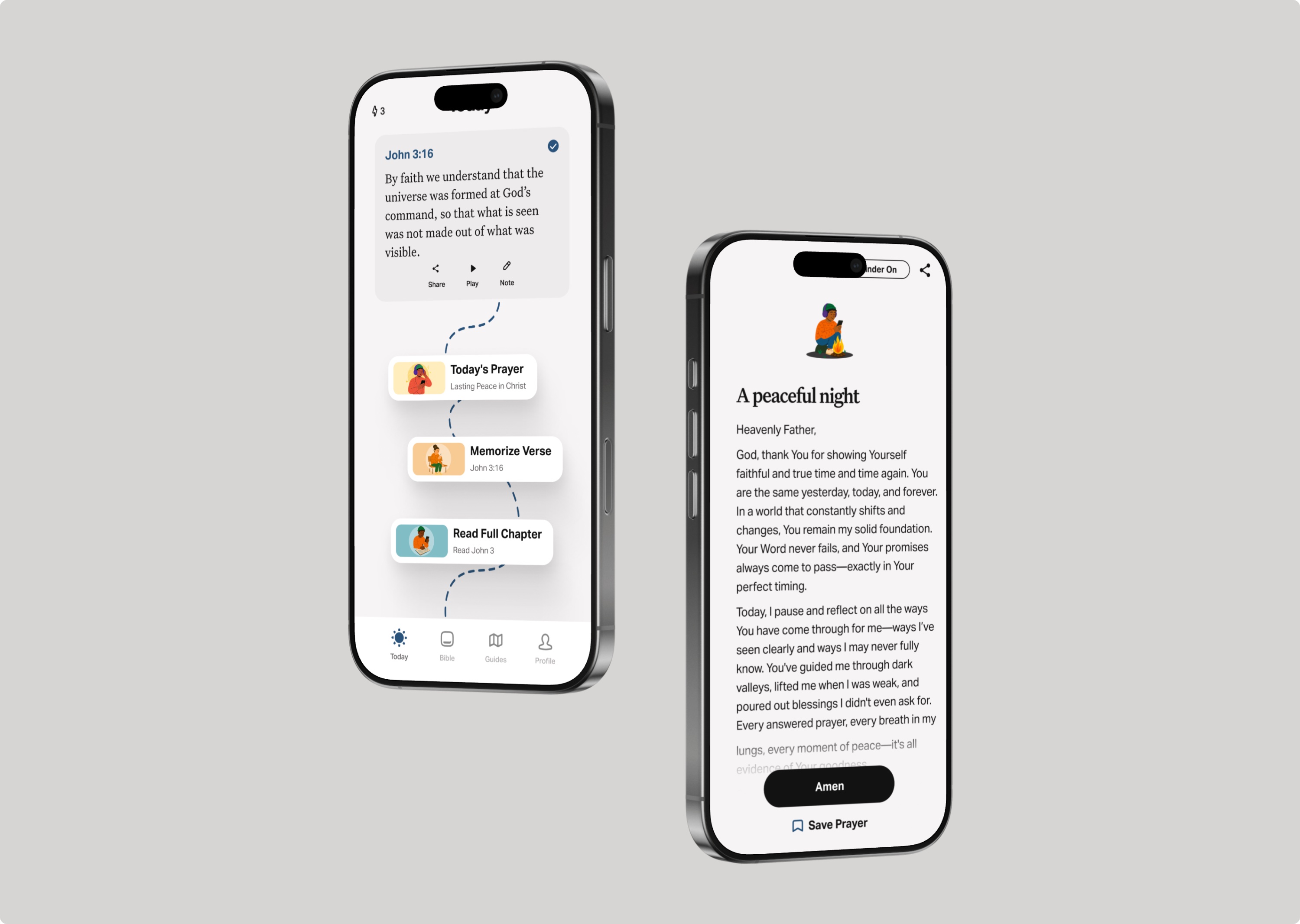
Prayer: one tap to start a conversation with God.
What didn't work
Our hypothesis was that Lite users only wanted direct Bible access. Scripture reading, nothing more. So we launched Guides: structured reading plans with devotional commentary. Adoption was low. The users who engaged were consistent, but total numbers never told a convincing story.
Plans retention in the main YouVersion app runs 17% higher than Guides retention in Bible App Lite. User research across Nigeria, Kenya, and LATAM explained the gap: our users want the Bible explained to them. They want context. They want felt-needs navigation. A devotional format that assumes biblical fluency doesn't land with someone who may be opening Scripture for the first time.
The roadmap shifted. We are now investing in content formats that meet users where they actually are.
What shipped
Bible App Lite launched as a test. It became a global product used in 192 countries, available in 300+ languages. The people it was designed for: those without reliable connectivity, those with older devices, those with limited storage. They now have a free, offline-ready path to daily Scripture. That was the brief. That's the outcome.
"Since I downloaded Bible App Lite, I've been filled with joy and I've committed to serve God forever. It's helped me pray and hear from God's Word every day."
Ogar · Nigeria · Bible App Lite user